


TL;DR
The CDSCO mandate QR code has expanded beyond the initial 300 pharmaceutical brands to improve drug traceability and reduce counterfeit medicines across India’s pharmaceutical supply chain. Every compliant QR code on medicine must include key product information, such as the product identification code, batch number, manufacturing date, expiry date, manufacturing licence number, and manufacturer details. Compared to traditional barcodes, QR codes offer greater data capacity, require less packaging space, support omnidirectional scanning, and provide a more reliable solution for pharmaceutical compliance and medicine verification.
“In the first phase, the mandate for manufacturers of the top 300 brands was to have a QR Code. In the next phase, the DCGI is looking at expanding this list to a larger number of products,” said Dr. Raghuvanshi, DCGI, at the 6th CII Pharma & Life Sciences Summit on October 9, 2024.
This directive, rooted in a notification released by the Central Drugs Standard Control Organisation (CDSCO) in November 2022, is a bold step toward strengthening drug traceability and combating counterfeit medicines.
For pharmaceutical manufacturers, understanding the CDSCO QR code on medicine mandate is no longer just about regulatory compliance. Implementing a secure QR code on medicine packaging helps improve supply chain visibility, simplifies product verification, builds consumer trust, and prepares businesses for future regulatory expansion. But what does this mean for the pharmaceutical industry, and how does it impact consumers?
When was the CDSCO QR Code on medicine mandate announced?
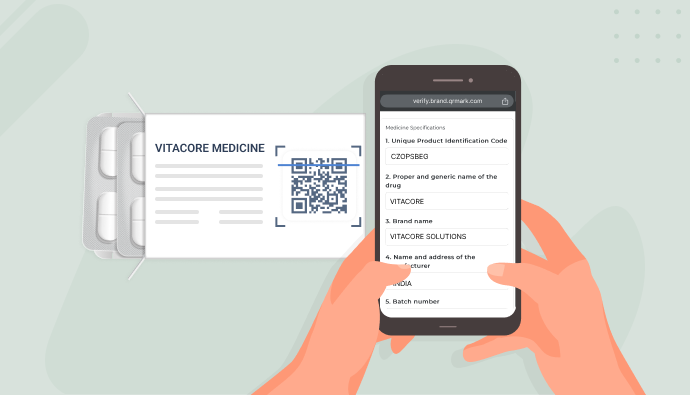
As per the notification released by CDSCO (Central Drugs Standard Control Organisation), Ministry of Health and Family Welfare, Government of India dated Nov 17, 2022, the manufacturers of drug formulation products specified in the notification shall print or affix Barcode or Quick Response Code (QR Code) which shall include the following particulars, namely:
- Unique product identification code
- Proper and generic name of the drug
- Brand name
- Name and address of the manufacturer
- Batch number
- Date of manufacturing
- Date of expiry
- Manufacturing license number
This rule came into effect on August 1, 2023, and aims to safeguard public health by ensuring the authenticity of pharmaceuticals.
As of now, 300 brands fall under this mandate, but CDSCO QR Code mandate is preparing to expand the list significantly. This regulation applies to both indigenous and foreign manufacturers marketing these brands in India.
Why has CDSCO mandated Barcodes or QR Codes on Medicines?
India’s vast drug supply chain faces increasing challenges from counterfeit drugs, which jeopardize patient safety by causing treatment failures or adverse effects. Barcodes or QR Codes offer a robust solution by:
- Enabling traceability and verification
- Providing quick access to product details
- Strengthening consumer trust in drug authenticity
Additionally, vaccines are also part of this initiative, with Barcodes or QR Codes mandated for widely used formulations such as
- Pfizer’s Prevnar 13 injection 0.5 ml
- Panacea Biotec’s Easy Six Prefilled Syringe 0.5 ml
- GlaxoSmithkline Pharma’s Varilrix injection 0.5 ml
- Synflorix injection 1
- Infanrix Hexa injection 0.5 ml
- Sanofi India’s Menactra injection 0.5 ml
- Hexaxim injection 0.5 ml

What are the possible penalties for non-compliance?
While specific penalties are not officially outlined, the CDSCO has demonstrated its commitment to quality by recalling products from 50 manufacturers for non-compliance with norms. With CDSCO banned drugs being a growing concern, non-adherence to this mandate may result in strict enforcement actions.
Barcodes vs. QR Codes: Why QR Codes Lead the Way
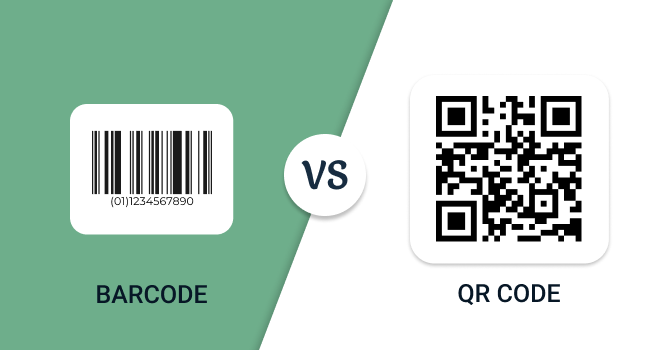
When it comes to drug traceability and compliance with CDSCO’s stringent requirements, QR Codes outshine traditional barcodes. Here’s why they’re the preferred choice for the pharmaceutical industry:
1. Higher Data Capacity
QR Codes on medicine can store a wealth of information, including URLs, drug specifics, batch numbers, manufacturing dates, expiration dates, and licensing details. This capability aligns perfectly with CDSCO’s mandates, ensuring all critical drug information is easily accessible in one scan.
2. Compact and Space-Efficient
QR Codes pack extensive data into a small area, making them suitable for limited label space, including primary and secondary packaging. This is especially critical for pharmaceutical products where space constraints are common.
3. Flexible Scanning
Unlike barcodes that require precise alignment for scanning, QR Code on medicine are omnidirectional. They can be scanned from any angle, making the process faster and more reliable—a significant advantage in fast-paced medical environments.
4. Future-Ready Design
As CDSCO expands its regulatory scope, QR Codes are primed to adapt. They can accommodate additional fields, encrypted data, or new compliance requirements, ensuring long-term usability.
How QR Codes Strengthen Medicine Safety?
For manufacturers, adhering to the evolving CDSCO standards can seem daunting, but tools such as QR Mark simplify the journey. Here’s how:
1. Verifiable QR Code Creation
QR Mark enables manufacturers to generate verifiable QR Codes for medicines that are not only secure but also fully compliant with CDSCO QR Code on medicine mandate with detailed requirements. From product identifiers to expiration dates, every detail is accounted for.
2. Custom Domain for Trust and Consistency
QR Mark allows manufacturers to link QR Codes on medicine to their custom domains, creating a seamless, branded experience for consumers. When scanned, the QR Code redirects users to the brand page displaying verified product details, fostering trust and authenticity.
3. Advanced Anti-Counterfeiting Measures
Counterfeit drugs are a significant public health threat. QR Mark addresses this by providing secure QR Codes that enable instant verification of a drug’s authenticity. Scans reveal essential data, such as batch and licensing information, reducing counterfeiting risks.
4. Seamless System Integration
Adopting QR Codes on medicine doesn’t have to disrupt existing workflows. QR Mark integrates seamlessly with production processes, supporting high-volume operations without delays.
Paving the Way for Safer Medicines
The CDSCO QR Code on medicine mandate initiative to include QR Codes on medicines is a critical step in combating counterfeit drugs and improving public health safeguards. With tools like QR Mark, pharmaceutical companies can effortlessly comply with these regulations while enhancing consumer trust.
In an era where authenticity and safety are paramount, QR Code on medicine transcend their role as simple labels. They become a symbol of reliability and security. With QR Mark, your company can turn compliance into a competitive edge—ensuring every scan tells a story of trust and transparency.
For a seamless QR Code compliance solution, contact us at [email protected] to enable secure verifications and take the first step towards safer medicines today!
FAQs
1. Are QR codes mandatory for all medicines in India?
No. At present, the mandate applies to an initial list of 300 pharmaceutical brands notified by CDSCO. However, the regulator has announced plans to expand the requirement to a much larger range of medicines, making it likely that more manufacturers will need to comply in the near future.
2. How do I verify a medicine using its QR code?
Simply scan the QR code on the medicine package using your smartphone camera or a QR code scanner. The scan should display the product details provided by the manufacturer, including batch information, manufacturing date, expiry date, and manufacturer details. If the information is missing, incorrect, or does not match the product packaging, the medicine should be treated with caution and reported to the appropriate authorities.
3. What happens if a pharmaceutical manufacturer does not comply with the CDSCO QR code mandate?
Manufacturers that fail to comply may face regulatory action, including product recalls, licence-related actions, legal proceedings, and reputational damage. As CDSCO continues to strengthen anti-counterfeiting measures, proactive compliance helps manufacturers avoid disruptions while maintaining trust with regulators and customers.
4. Why are QR codes preferred over traditional barcodes for medicines?
QR codes can store significantly more information than traditional barcodes while occupying less space on packaging. They can also be scanned from any angle, support digital verification, and accommodate future regulatory requirements, making them better suited for pharmaceutical traceability and anti-counterfeiting initiatives.
5. How long does it take to implement CDSCO-compliant QR codes?
Implementation timelines vary depending on a manufacturer’s production systems and packaging workflows. With a dedicated secure QR code management platform, many manufacturers can integrate QR code generation into existing production processes within a few weeks, especially when ERP or packaging systems are already digitized.
6. Can consumers identify counterfeit medicines using a QR code?
Yes. A QR code allows consumers to instantly access the official product information published by the manufacturer. Matching details such as the product name, batch number, manufacturing date, and expiry date helps verify authenticity. While QR codes are an important anti-counterfeiting tool, consumers should also purchase medicines only from licensed pharmacies and report suspicious products to the relevant authorities.
