

TL;DR
Fake proof of insurance is easy to create. Most fakes are small edits to a real document, not hacked systems. It usually passes because people stop checking once a document is shared. The reliable defence is to verify the source, not the copy: check the policy directly with the insurer or scan a QR code that resolves to the insurer’s own record. Insurers, employers, landlords and drivers are all exposed. This guide shows how fakes are made, how to spot one, and how issuers make policies verify themselves.
Insurance fraud is no longer rare. It is a serious problem today. One fast-growing issue is people producing fake proof of insurance documents. These documents look real and official. They often pass quick checks, but they are not valid.
In the United States alone, insurance fraud costs more than $308 billion every year.
The main reason is simple. Most people trust documents without checking them properly.
This guide explains:
- How do fake insurance documents spread?
- How to spot them?
- How do modern checks help insurers, employers, and businesses stay safe?
Let’s break it down step by step.
Why is fake proof of insurance becoming so common?
Once a document leaves the insurer’s system, most checks stop. People usually trust the document just because it looks official. Fraudsters rely on this blind trust.
Instead of breaking into systems, fraudsters:
Copy a real insurance document -> Make small changes ->Share it again
With this process, the fake insurance document gets mixed up with the real ones. Most people stop checking once a document is shared. That is how fraudsters use insurance companies to trick them.
These documents are:
- Emailed
- Printed
- Uploaded
- Sent on WhatsApp
- Screenshot and reshared
Each copy looks the same. After a few shares, no one knows where it came from.
Fraudsters change a name, a date, or a policy number. The document still looks real. So it passes. That is how insurance fraud spreads.
Before understanding how to stop a copy of a fake insurance from spreading, let us understand first what insurance fraud is.
What Is Insurance Fraud?
Insurance fraud means tricking an insurance company on purpose to get money you should not get. Insurance fraud happens when people use false information or fake documents to get insurance coverage or money.
It can be done by:
- Individuals
- Employees
- Agents
- Organized groups
It affects many types of insurance. Let us take a look at the most common ones.
Common Types of Insurance Fraud
I. Auto Insurance Fraud
Auto Insurance or Car Insurance fraud is the most common type. Recently, Association of Kenya Insurers (AKI) busted 44 motorists in case of producing false motor insurance certificates.
Some examples are :
- Fake insurance cards shown during traffic checks
- Expired policies edited to look active
- Fake certificates used to register vehicles
A copied fake insurance card often passes unless someone checks it properly.
II. Home Insurance Fraud
This includes:
- Fake repair bills
- Changed coverage amounts
- Backdated insurance documents
Many of these documents look clean and professional.
Recent data shows that 5–10% of property and casualty claims are suspected to be fraudulent. This costs insurers about $34 billion every year in the US.
III. Health Insurance Fraud
Health insurance fraud happens when someone uses false details or fake documents to get medical care or money they should not receive.
Common examples:
- Fake insurance cards
- Forged medical bills
- Changed treatment records
Hospitals may accept these before checks catch the problem.
IV. Agent or Industry Fraud
This happens when agents or brokers misuse their position.
Examples include:
- Taking premiums but never sending them to insurers
- Issuing fake policies
- Using stolen identities to create coverage
In many cases, honest customers carry fake insurance without knowing it.
V. Employer Insurance Fraud
This happens in workplaces and business settings.
Employers see this during:
- Hiring
- Contractor onboarding
- Vendor checks
Examples:
- Fake employee insurance certificates
- Edited group health policies
- Expired coverage shown as active
This is why employers must verify insurance documents.
How Insurance Companies Protect Documents Today From Insurance Fraud
Insurance companies protect insurance documents by using digital security tools. These tools control who can see a document. They also track changes and prevent hidden edits. This helps insurers reduce fraud and check documents faster
Below are 7 simple ways insurance companies protect insurance documents from fraud
1. QR code–based verification
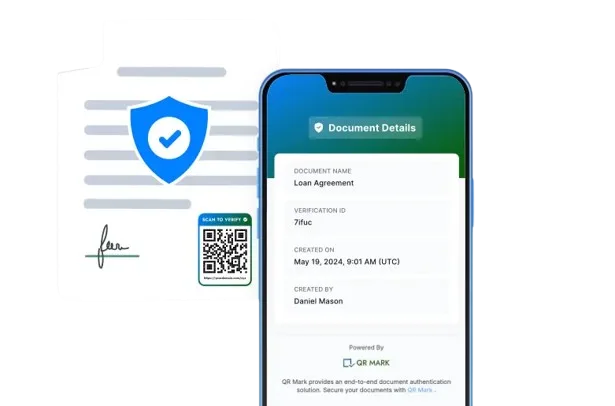
Insurance companies add QR codes to documents to make verification instant. When someone scans the code, it shows the original policy details from the insurer. This makes it easy to spot fake or edited documents, even if the file is copied, printed, or shared.
2. Encryption
Insurers use encryption to lock data when they store it and when they send it. Even if someone steals the data, they cannot read it without permission.
3. Access controls
Only approved staff can view or change insurance documents. Insurers use role-based access to control who can see what. They also add extra login checks, like one-time passwords, to stop unauthorized users.
4. Document management systems (DMS)
These systems store documents in one secure place. They keep a history of changes and record who edited the file. This helps catch silent or unauthorized edits.
5. Audits and monitoring
Insurers often check their systems. This helps them spot unusual access or suspicious changes early.
6. Secure APIs
Insurers control access by assigning roles to users. They add extra login checks, like one-time passwords, to block unauthorized users. This reduces risk while data moves between systems.
7. Digital signatures
Digital signatures confirm who signed a document. They also show whether someone changed the document after signing it.

Why QR Codes Make Securing of Insurance Documents Easier
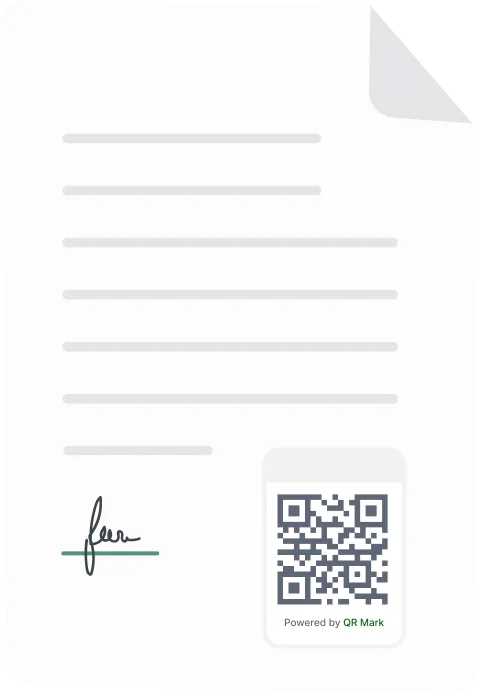
QR codes make insurance verification easier by linking the document to the insurer’s official record. This lets people verify the source instead of trusting a copied document. Anyone can scan the code with a phone. They can then check details like the policy number, coverage dates, and insured name in seconds.
1.Trust the source, not the copy
Benefits of Using QR Codes for securing insurance documents
QR codes send users straight to the insurer’s original record. This removes the risk of trusting PDFs, screenshots, or printed copies. Fake documents fail right away.
2.Fast and easy verification
QR codes need no app, no login, and no training. Anyone with a phone can scan and verify insurance in seconds.
3.Works even when documents are shared
Insurance documents get emailed, printed, and forwarded all the time. A QR code stays with the document and still links back to the source.
4.Easy to spot changes
If someone edits dates, coverage amounts, or policy numbers, the QR scan shows the real data. Mismatches become obvious.
5.Easy to use at scale
QR Codes are low cost, simple to add, and work for both digital and printed documents. Insurers do not need customers to change their behavior.
6. Helps with prevention and investigation
QR scans stop fake documents early. They also show when and where checks happen. This helps insurers spot fraud patterns over time.
How Do People Create a Copy of a Fake Insurance Document?
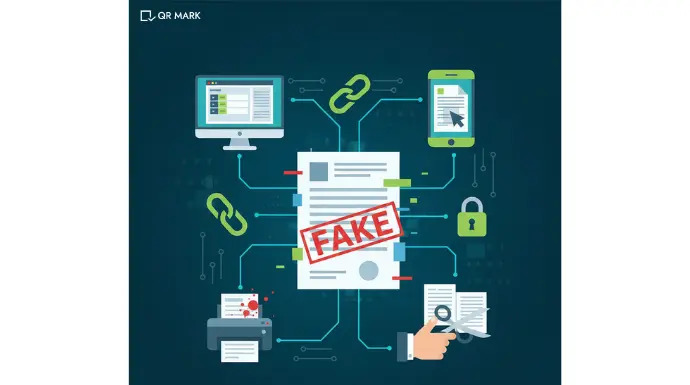
Most fake insurance documents today are digital. People copy a real insurance document. They then make small changes that are hard to notice, creating a fake version. Most insurance fraud today does not involve hacking systems. It relies on weak verification and simple editing.
Here are the most common methods.
1.Editing a Real Document
This is the most common trick.Fraudsters take a real policy and change:
- Name
- Dates
- Policy numbers
- Coverage limits
They use basic PDF tools or image editors. After someone edits the document, they copy and reuse it.
2.Creating a Fake Document From Scratch
Some fraudsters create documents from nothing.
They use:
- Public samples
- Leaked templates
- Copied logos
These counterfeit insurance certificates often look real at first glance.
3.Forging Signatures
People copy signatures using:
- Tracing
- Image copying
- AI tools
This is common on approval letters and policy confirmations.
4.Using AI and Deepfake Tools
Modern insurance fraud is faster.
AI is now used to:
- Write fake claim stories
- Create fake identities
- Edit accident photos
- Generate fake medical reports
This is why detecting insurance fraud is becoming harder.
5. Creating Fake Supporting Documents
Fake insurance is often backed by:
- Fake police reports
- Fake repair bills
- Fake medical records
Together, they create a convincing story.
How Insurance Companies Are Impacted by Fake Insurance Documents
Fake insurance documents cause direct financial losses for insurance companies. They raise operating costs and damage trust and pricing models over time. They do not just affect one claim. They weaken the entire insurance system.
Some of the direct consequence faced by fake insurance documents are:
1. Direct Financial Losses
Insurers end up paying claims on forged or invalid insurance policies. They may also collect premiums on policies that were never real and later have to issue refunds.
Even when money is recovered, investigation costs remain. Recovery of the money rarely covers the full cost.
2. Higher Investigation Costs
Fake insurance documents increase investigation and operating costs for insurers. Companies must spend more on fraud teams and manual reviews. They also need to invest in legal support and third-party checks.
The impact is highest in life insurance, which loses around $75 billion a year to fraud. It is followed by Medicare at $68.7 billion and workers’ compensation at $34 billion.
To protect policy documents from insurance fraud, insurers must:
- Investigate
- Re-verify documents
- Contact third parties
- Handle legal overhead
Result: Delays for genuine claims
To control insurance fraud, insurers add more checks before validating a policy.
These checks include:
- Background checks
- Medical examinations
- Claim inspections
Due to this claim approvals slows down for genuine customers and increases frustration. That means more paperwork, longer waits, and delayed payouts. Honest customers suffer because of fraudsters.
3.Regulatory and Compliance Risk
If fake documents pass undetected, insurers may face regulatory scrutiny. They could also be hit with fines and mandatory audits due to weak controls. Weak verification is no longer acceptable.
4.Damage to Brand Trust
When fake policies circulate, customers and partners lose confidence. Rebuilding trust takes time and money.
When fake policies circulate:
- Customers lose confidence
- Partners hesitate
- Media attention grows
Trust is hard to rebuild.
5. Distorted Risk and Pricing
Fake documents distort claims data and risk profiles. This leads to inaccurate underwriting decisions and higher premiums in the long run.
How to Tell If Insurance Is Fake
Fake insurance documents often show small warning signs. You can see it appear when someone edits or copies a real document. If you cannot verify the policy with the insurer, treat the document as suspicious.
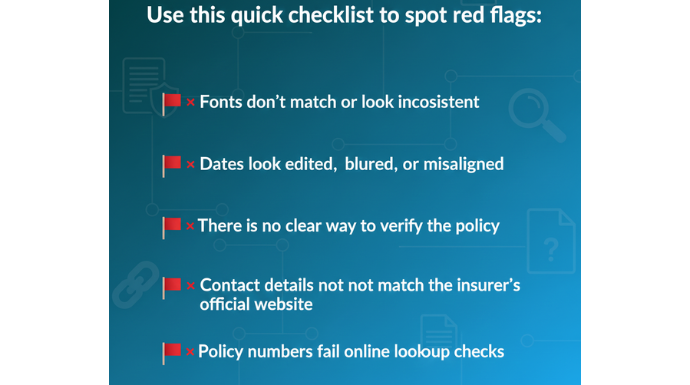
Use this quick checklist to spot red flags:
- Fonts don’t match or look inconsistent
- Dates look edited, blurred, or misaligned
- There is no clear way to verify the policy
- Contact details do not match the insurer’s official website
- Policy numbers fail online lookup checks
The QR code is missing or leads to a broken or unrelated link
If something feels off, always verify it with the insurer before moving forward.
How to Verify Insurance Documents Online
Use this simple checklist to verify insurance the right way:
1.Contact the insurer using official details
Call or email the insurer using contact details from their official website. Do not use the contact information written on the document.
2.Use insurer lookup tools
Many insurers use tools where you can check policy numbers, coverage dates, and the name of the insured person.
3.Check licensing with regulators
Make sure the insurer and the agent are licensed by the insurance regulator.
4.Scan QR codes if available
A real QR code should take you to the insurer’s official verification page or database.
5.Pause decisions until verified
Stop payments, hiring, or onboarding until the insurance is confirmed.
This checklist is useful for employers, landlords, vendors, and hiring teams.
What to Do If You Find a Fake Proof of Insurance?
If you find fake proof of insurance, act fast. This helps stop fraud, limit losses, and protect everyone involved.
Use this simple checklist:
1.Save the evidence
Keep the original file, screenshots, emails, and any messages linked to the document.
2. Verify with the insurer
Contact the insurance company using details from its official website. Do not trust the contact information written on the document.
3. Pause payments or onboarding
Stop claims, payments, hiring, or vendor approvals until the insurance is confirmed
4.Report to the authorities
Inform the insurer’s fraud team and report the issue to the regulator or the police if needed.
5.Document everything
Write down dates, names, and actions taken in case the issue needs further review later
Final Thought
To create fake proof of insurance documents is cheap and easy. But the harm it causes is very real. Fraud leads to financial loss, legal trouble, and broken trust. That is why relying on documents alone no longer works.
The solution is simple. Verify the source, not the copy. QR-based verification makes this possible by linking documents back to the issuer. Trust on its own is no longer enough. Verification must be built in. That is how you stop insurance fraud.
FAQs
1.What happens if I lie on my insurance policy?
If you lie on your insurance policy, the insurer can deny your claim, cancel your policy, and keep your premium. Lying on your policy is always going to be serious. It might lead to fines or criminal charges for insurance fraud.
2.How to spot fake car insurance?
You can spot fake car insurance by checking for edited dates, mismatched fonts, invalid policy numbers, missing QR codes, or details that do not match the insurer’s official records. Always verify directly with the insurer.
3.Does car insurance cover theft?
Car insurance covers theft only if you have comprehensive coverage. Basic or third-party insurance does not cover vehicle theft.
4.What happens if you don’t have proof of insurance?
If you don’t have proof of insurance, you may face fines, penalties, vehicle impoundment, or license suspension. Claims may also be denied until valid insurance is confirmed.
5.Can you fake proof of insurance?
Yes, Fake proof of insurance can be created, but it’s against the law. It’s a type of document fraud and can lead to serious penalties. Insurance companies and officials can verify whether a policy is genuine.
