


TL;DR
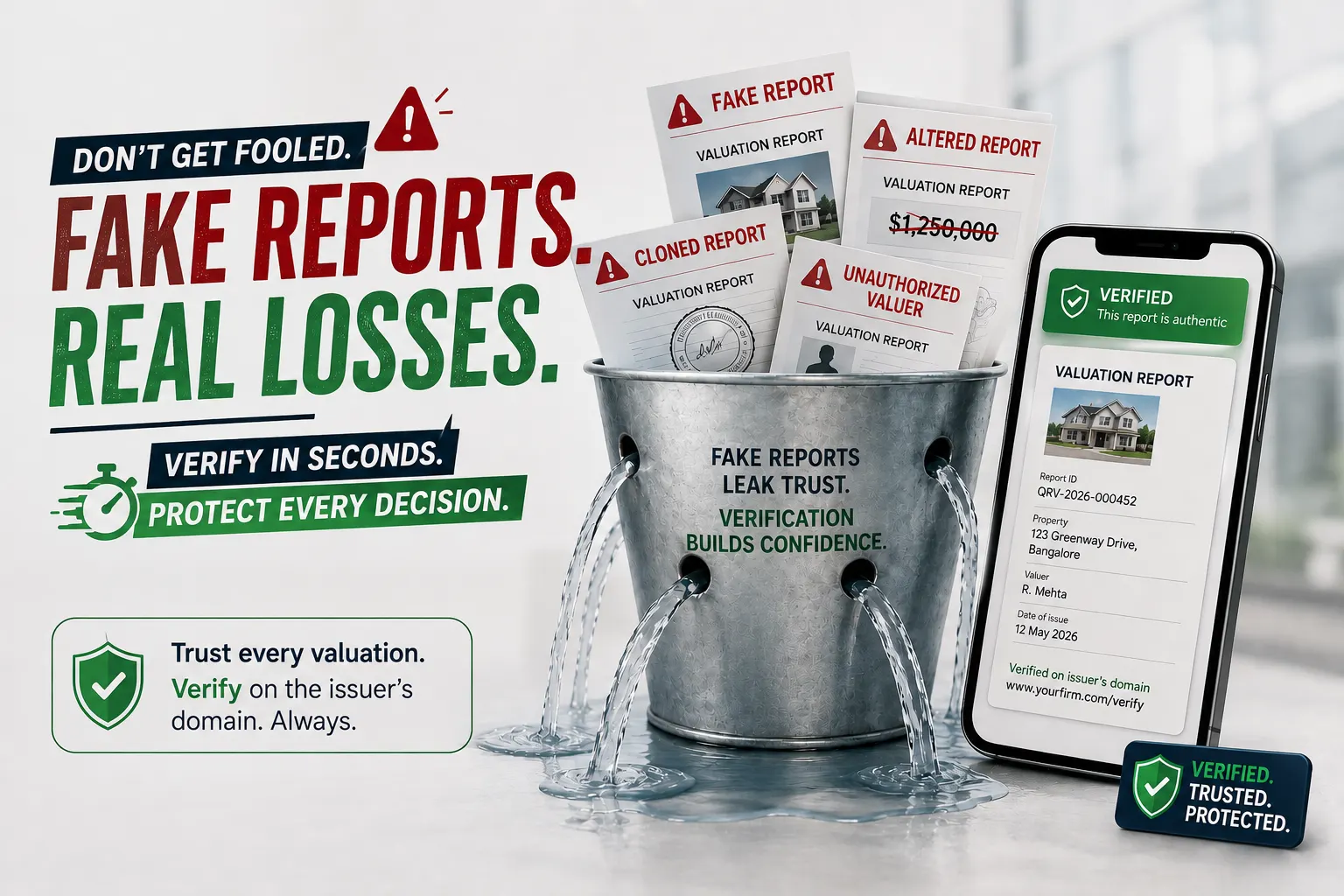
Property valuation report fraud happens when a valuation report is forged, changed after it was issued, or produced under a real firm’s stolen identity. Lenders and buyers rely on these reports to release money and close deals, so a fake one causes direct financial loss. Manual checks are slow and easy to fool. The dependable fix is a report the recipient can verify in a few seconds on the issuing firm’s own domain.
A property valuation report can look like just another document in a loan file. But when that report is fraudulent, the consequences can extend far beyond a single piece of paperwork.
A $30 million mortgage fraud scheme in Long Island, New York, shows how serious the problem can become.
According to the U.S. Department of Justice, the conspirators allegedly inflated property prices, used false appraisals to justify those prices, and secured mortgages for more money than the properties were actually worth.
The mortgages were then sold to other investors. When the properties later went into foreclosure, they were found to be worth about 80% less than the loan amounts.
That’s what makes property valuation report fraud particularly dangerous. The document may carry a legitimate firm’s name, logo, signature, and valuation figure and still be completely fraudulent.
In this guide, we’ll look at what property valuation report fraud looks like, how appraisal fraud happens, how to spot a fake valuation report, and how valuation firms can give lenders and other recipients a faster way to verify that a report actually came from them.
What Counts as a Fake Property Valuation Report?
A fake property valuation report is a report that looks genuine but was not actually issued or approved by the firm named on it. It usually takes one of four forms:
- A fully new report, where no real valuation ever took place.
- A genuine report altered after issue, with the figure, date, or property details changed.
- A report sent under a real firm’s stolen identity or cloned letterhead.
- A report from a valuer who does not exist or is not licensed to practise.
Each one looks convincing on paper. That is the point. The document is built to survive a quick look, which is often all it gets before someone acts on it.
How Is a Property Valuation Report Faked?
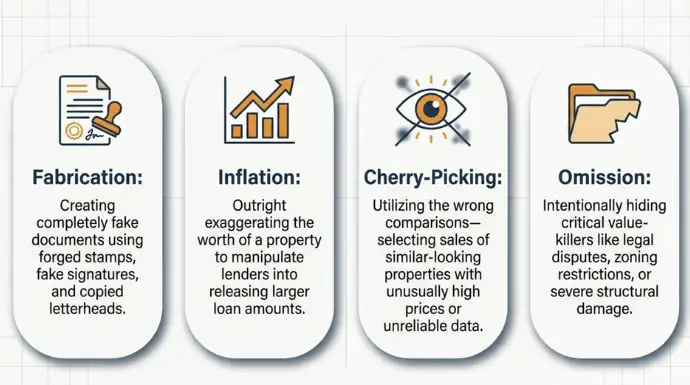
In 2026, property valuation report fraud is done through four ways:
- Fake Documents: Creating a completely fake valuation report using copied letterheads, fake signatures, or forged stamps.
- Inflating the Property Value: Reporting a property as being worth much more than it actually is to help someone get a larger loan.
- Using the Wrong Comparisons: Using sales of similar-looking properties with unusually high prices—or unreliable data—to make the property appear more valuable.
- Hiding Important Problems: Leaving out issues such as legal disputes, structural damage, zoning restrictions, or other factors that could lower the property’s value.
How to Prevent and Identify Property Valuation Report Fraud
Preventing property valuation report fraud starts with securing the document at the point of issuance.
Issuers need controls that make it difficult for someone to create a convincing fake, alter an authentic report, or falsely claim that a report was issued by their organization. Here are some ways to prevent property valuation report fraud.
1. Assign a unique report ID to every valuation
Give each valuation report a unique, traceable identification number. Maintain a centralized record containing the report ID, property details, valuation date, valuer, and date of issue. This makes it easier to identify duplicate, altered, or fabricated reports.
2. Give every report a way to be independently verified
This is one of the strongest ways to protect an issued valuation report.
Add a unique QR code to every report. When a recipient scans it, they should be taken to a verification page controlled by the issuing organization. The page can confirm the report’s unique ID, issuer, issue date, and other relevant information.
This lets recipients answer a critical question without relying on the appearance of the document:
“Did this organization actually issue this report?”
If someone modifies the valuation amount, property details, date, or other information in a downloaded copy, the discrepancy can be identified by scanning the QR Code and verifying it with the issuer’s original record.
This is where QR Mark can help. It lets issuers add a unique, scannable QR code to every valuation report and link it to a verification page on their domain, making it easy for recipients to confirm the report’s authenticity.
3. Control who can create and issue reports
Limit report creation and approval to authorized employees or registered valuers. Use role-based access controls so that only designated personnel can generate, edit, approve, or finalize valuation reports. Keep an audit trail of who created and approved each document.
4. Protect the final document from unauthorized changes
Once a valuation is approved, generate a final, read-only version of the report. Use measures such as protecting PDF permissions, digital signatures, controlled templates, and version tracking to minimize the risk of unauthorized modifications after the report has been issued.
However, visual security features alone aren’t enough. A forged document can still replicate a logo, signature, stamp, or letterhead.
5. Provide a clear process for cancelled or replaced reports
Valuation reports may be withdrawn, corrected, or superseded. Don’t simply delete old records. Mark them as cancelled, revoked, or superseded in the verification system.
This prevents someone from presenting an outdated or withdrawn report as if it were still valid.
6. Train staff to recognize common fraud attempts
Employees involved in preparing and issuing valuations should know how fraud happens. Training should cover fake templates, unauthorized edits, stolen credentials, forged signatures, manipulated property information, and attempts to issue reports outside approved workflows.
What Are the Consequences of Acting on a Fraudulent Report?
The cost of a fake report lands on more than one party. A lender that releases funds against a forged or inflated report can face direct loss and a slow, difficult recovery.
The exact penalties vary by jurisdiction and depend on the nature of the fraud, the person’s knowledge, and their involvement. Several countries have laws covering fraudulent documents, false statements, forgery, and deceptive conduct:
| Country | Relevant law | Potential penalty |
| United States | 18 U.S.C. § 1014 | Up to $1 million fine, 30 years’ imprisonment, or both for covered false statements or willful property overvaluation. |
| United Kingdom | Fraud Act 2006 | Fraud by false representation can carry up to 10 years’ imprisonment, a fine, or both. |
| India | Bharatiya Nyaya Sanhita, 2023 | Certain forms of forgery intended for cheating can carry up to 7 years’ imprisonment and a fine; knowingly using a forged document can attract the same punishment as the forgery. |
| Canada | Criminal Code | Certain fraud offences can carry up to 14 years’ imprisonment, while using or dealing with a forged document can carry up to 10 years. |
| Australia | Criminal Code Act 1995 | Penalties vary by offence; certain fraudulent document offences can carry up to 10 years’ imprisonment plus substantial fines. |
Frequently Asked Questions
Q: Is property valuation report fraud illegal?
A: Yes. Forging or altering a valuation report, or issuing one under another firm’s identity, is a form of fraud and forgery in most jurisdictions. Penalties vary by country and by the size of the loss. This article is general information, not legal advice.
Q: How can you quickly check if a valuation report is genuine?
A: Confirm it came from the firm named on it. The fastest way is a verification link that loads on the firm’s own domain and shows the report’s key details. If those details match the document in hand, the report is genuine.
Q: Does the recipient need an app to verify a report?
A: No. Any smartphone camera or a normal web browser opens the verification page. There is nothing to install and no account to create for the person doing the check.
Q: Can a fraudster copy the QR code onto a fake report?
A: Copying the image does not help them. The verification page still shows the real recorded details and loads on the firm’s verified domain. A fake report will not match those details, which is what gives it away.
Q: Can QR Mark tell if a valuation figure is inflated?
A: No, and it does not claim to. QR Mark confirms that a report is authentic, unaltered, and from the named firm. Judging whether the figure itself is fair is a separate matter for the valuation process.
